Booking choice: The all-inclusive small-group tour, 10.5 hours, Max 10. Book this Compare the options below
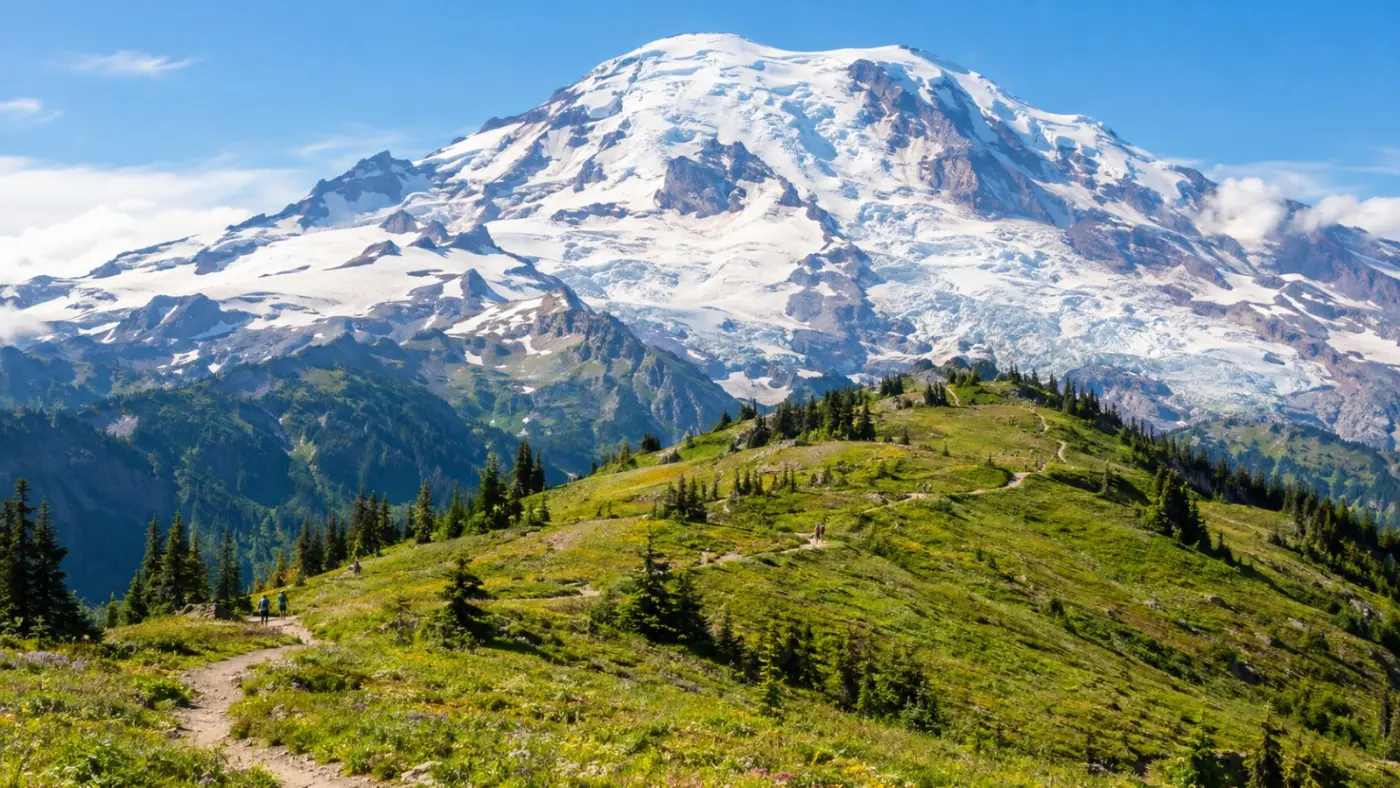
Mount Rainier rises to 14,410 ft, the official NPS figure, and it carries 28 major glaciers: the NPS calls it the greatest single-peak glacial system in the contiguous United States. That ice is why the question "can you hike Mount Rainier?" has two answers.
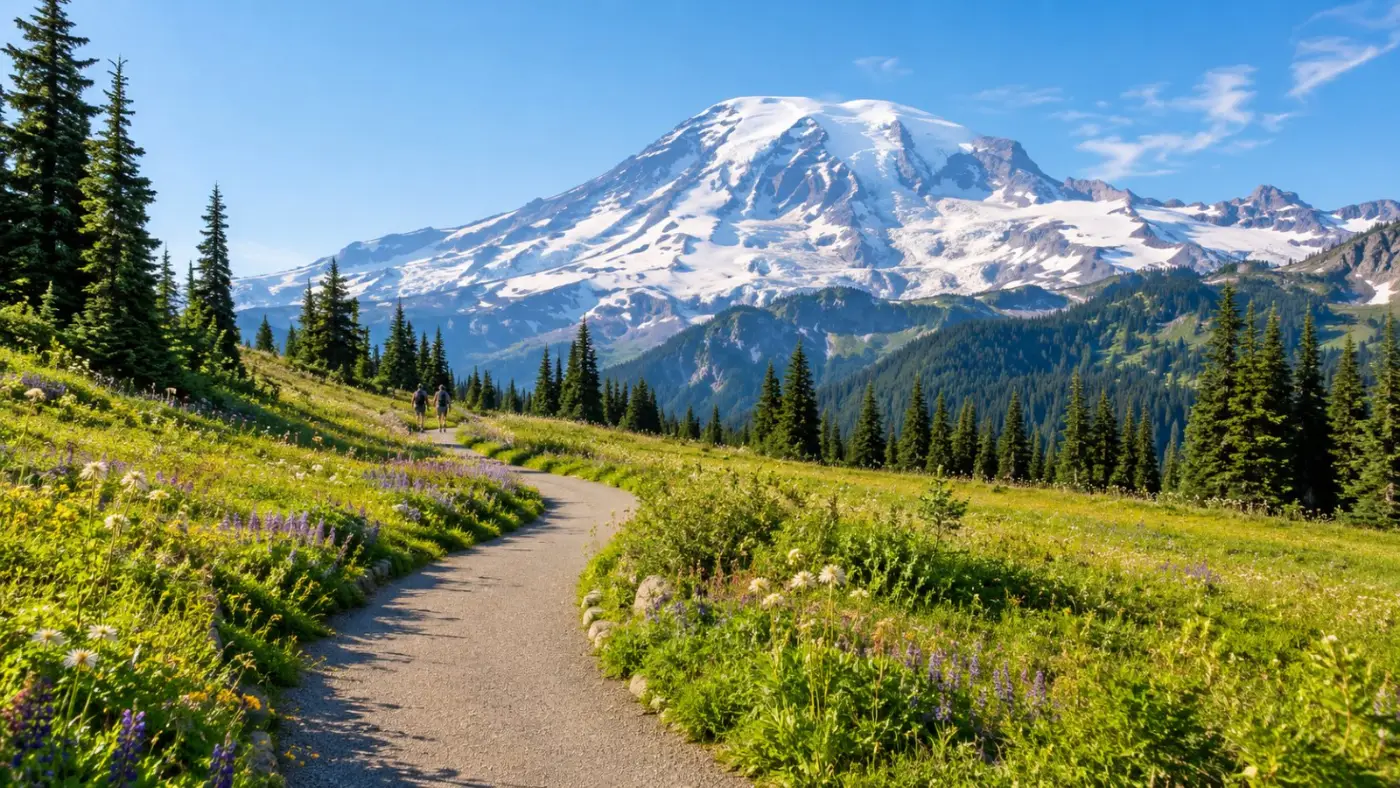
You can hike its lower slopes on well-built trails from Paradise and Sunrise. Reaching the summit is a different activity: a multi-day climb on glaciers, with a permit, rope skills and real risk. This guide explains the difference, what the park's numbers say about the climb, and where day visitors should hike instead.
The quick answer
You cannot walk to the top of Mount Rainier. The summit is a technical glacier climb: the NPS requires a climbing permit and an annual climbing fee to be on a glacier or above about 10,000 ft, expects glacier-travel rope skills, and plans three to four days for the trip. About 10,000 people attempt it each year. Day visitors hike the meadow trails instead, such as the Skyline Trail to Panorama Point. None of the tours on this site climbs the mountain.
Can you hike to the top of Mount Rainier?
No. The summit is reached by glacier mountaineering, not by a hiking trail, and the NPS requires a climbing permit and the annual climbing fee on any glacier or above about 10,000 ft.
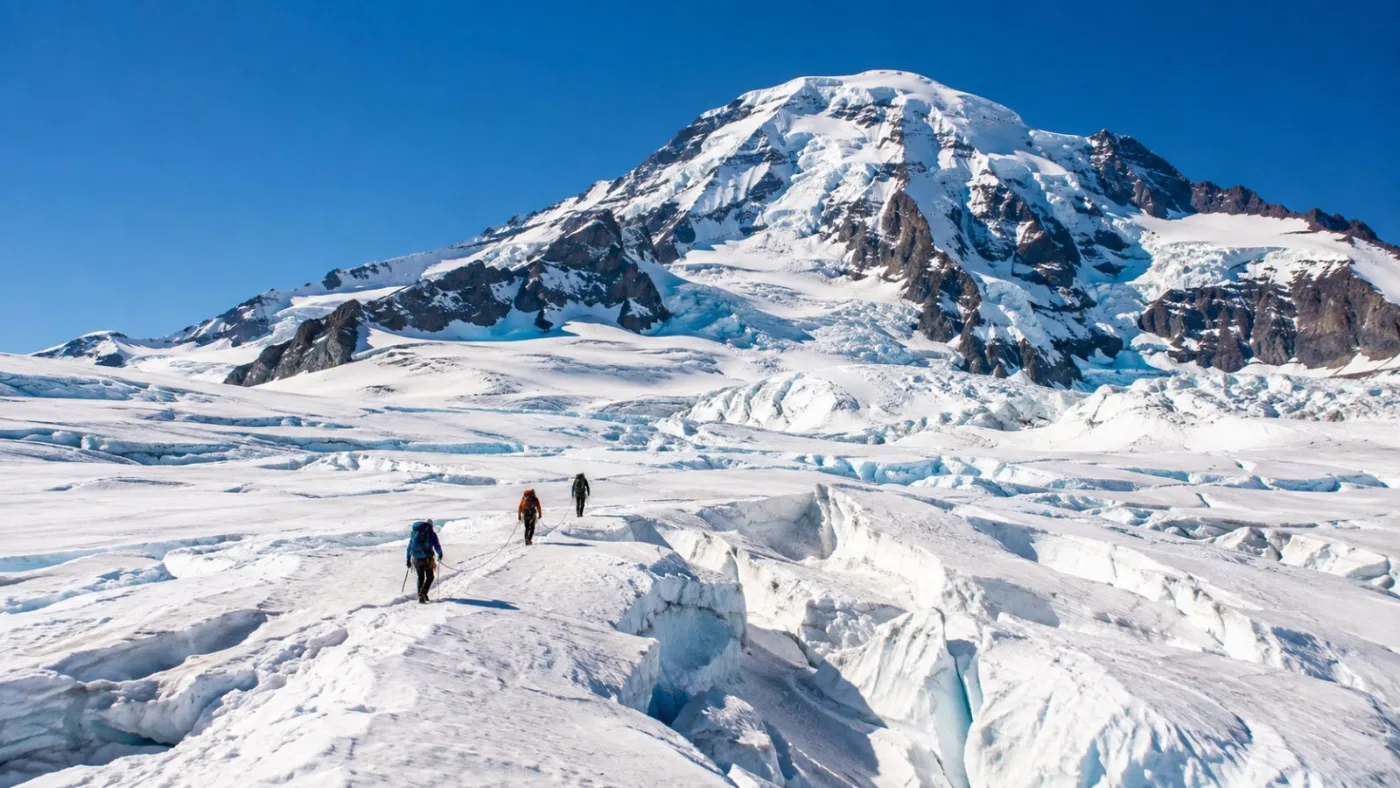
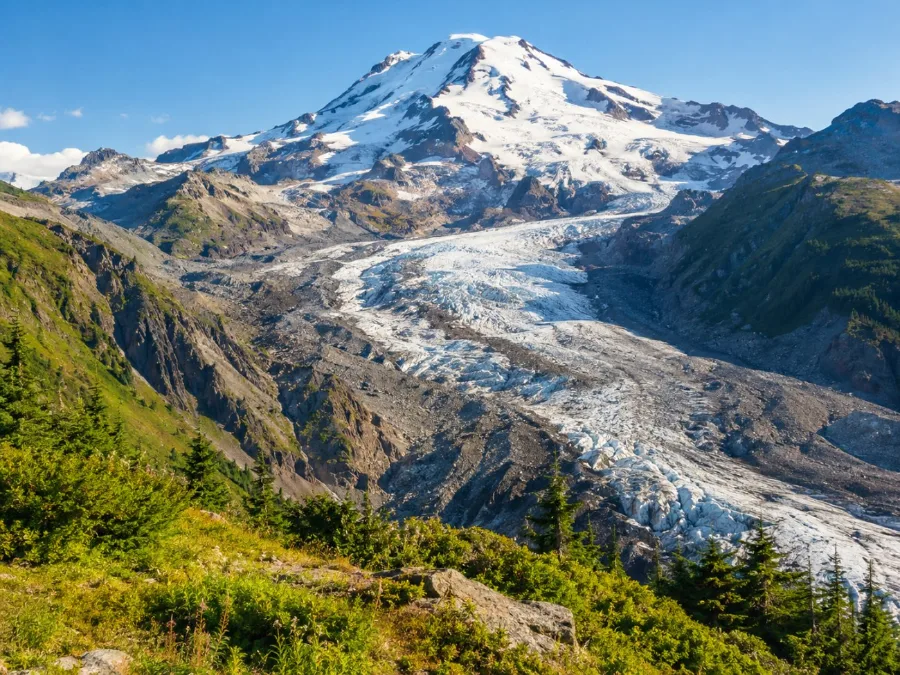
There is no trail to the summit. The routes cross glaciers, where the park lists crevasses and avalanches among the hazards, and it says technical glacier-travel rope skills are required. Climbers also register with the park, and they need a wilderness permit for overnight stays. The park describes more than 20 routes; the best known are Disappointment Cleaver and Ingraham Direct, Emmons-Winthrop, Kautz Glacier and Liberty Ridge.
The summit height you will see is 14,410 ft, the figure used by the NPS and the USGS. A 1999 GPS survey measured 14,411 ft, and more recent surveys show the ice summit melting lower.
How long does it take to climb Mount Rainier?
The NPS says three to four days, depending on the route and conditions. Guided programs usually spend about two of those days on the mountain itself.
A typical guided plan, such as RMI's 4-Day Climb, uses two days for logistics and training, then climbs from Paradise to Camp Muir on the first mountain day and goes to the summit and back down on the second. So if you are asking whether you can climb Rainier in a day, the park's own planning figure is three to four days, and that is the plan to make.
Climbing is usually done in spring and early summer, according to the NPS. Summer climbing registration runs from May 22 to September 30.
Can a beginner climb Mount Rainier?
Not without learning glacier skills first. The realistic route for a beginner is a guided climb with one of the three guide services authorized by the park, with training built in.
The park authorizes three guide concessioners: Alpine Ascents International, International Mountain Guides, and Rainier Mountaineering, Inc. (RMI Expeditions). RMI's 4-Day Climb, for example, starts with two days of logistics and training. Climbing without training is not a sensible plan: the NPS says technical glacier-travel rope skills are required, and even the approach to Camp Muir gains 4,680 ft.
If you want a big day on the mountain without ropes, a long trail hike is the realistic goal. Read the Skyline Trail guide for the classic loop above Paradise.
Want real mountain time without ropes? The 14-person guided day plans about three hours of guided park highlights, with park entry included.
Book thisWhat is Camp Muir, and can you hike there?
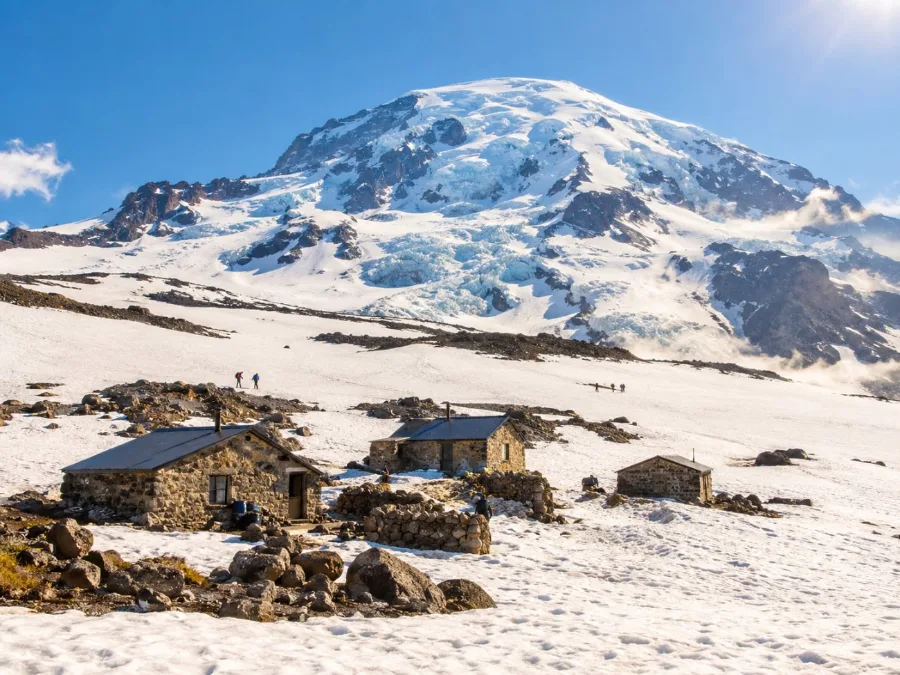
Camp Muir is the high camp at 10,188 ft on the main summit route. The hike from Paradise is 9 miles round trip with 4,680 ft of gain, on a snowfield where whiteouts can hit suddenly.
Camp Muir is not a casual walk. The route climbs the Muir Snowfield, and the NPS warns that "white-out conditions ... can occur suddenly" and that navigation mistakes there "have resulted in lost climbers and hikers and fatalities". Crevasses, cliffs and avalanches are also listed hazards. Going onto a glacier, or above Camp Muir, needs the climbing permit and climbing pass.
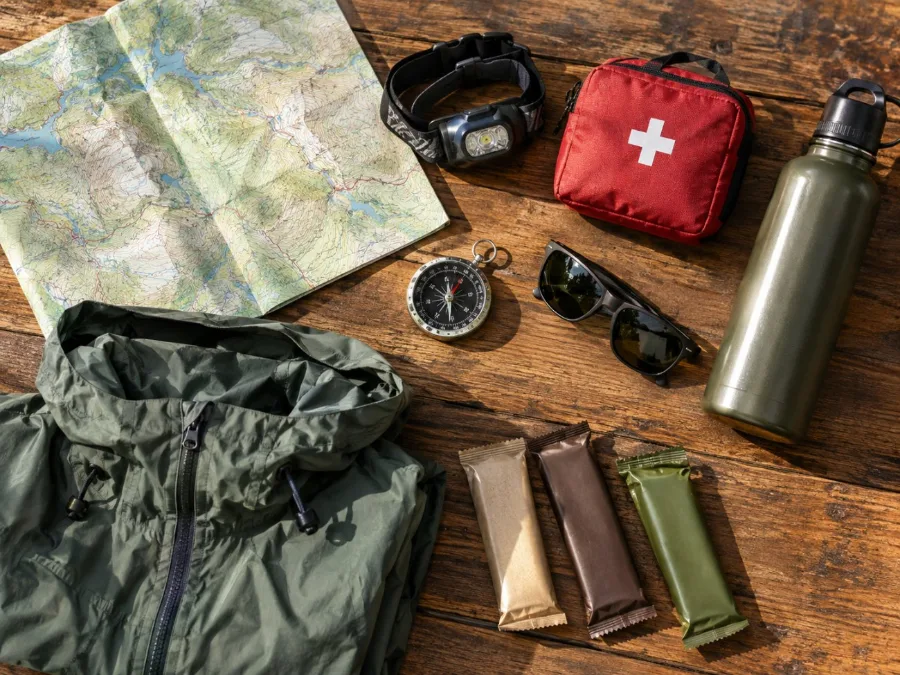
If you plan it anyway, carry map, compass or GPS and the rest of the Ten Essentials, check the weather, and turn back when clouds move in. See what to bring hiking at Mount Rainier.
How many people climb Mount Rainier each year, and how many succeed?
About 10,000 people attempt it each year, the park says. In 2015 to 2018, about 48% of climbers reached the summit; the NPS stopped recording summit success after 2019.
The park's climbing statistics show 10,000 to 11,500 climbers a year from 2014 to 2019, with a peak of 11,455 in 2017. Numbers fell to 2,752 in 2020, then recovered to 9,138 in 2021 and 9,530 in 2022.
The success rate was 57.0% in 2014 and between 47.7% and 48.7% from 2015 to 2018. From 2019 onward the NPS no longer records how many climbers succeed, so "about half" is the last figure the park has published.
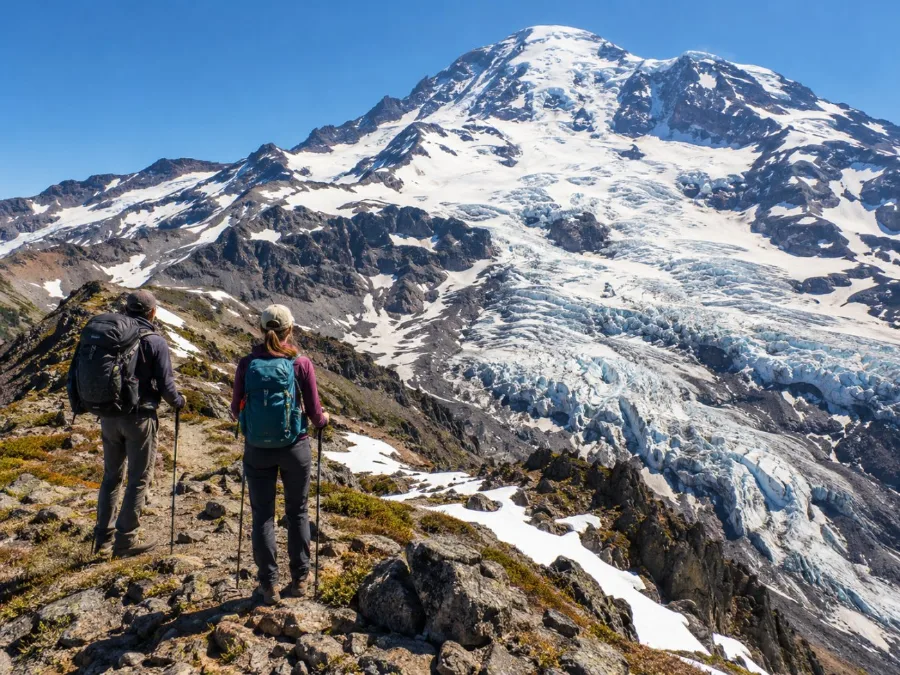
The five-person day hike heads for the Burroughs ridges above Sunrise on a trail the listing describes as non-technical, with lunch, poles and park fees listed as included. Sunrise Road is closed to private vehicles for the rest of 2026, so check routing with the operator.
Book thisHow dangerous is climbing Mount Rainier?
It is serious mountaineering. The park has no official yearly average, but park data suggest roughly one climbing death a year on average, with big variation between years.
National Parks Traveler, citing park data, counted about 90 summit climbers among the park's fatalities from 1897 to 2017, plus about 35 deaths in other climbing accidents. The worst single accident came on June 21, 1981, when an icefall and avalanche on the Ingraham Glacier killed 11 people, 10 clients and one guide. It was the worst mountaineering accident in United States history.
The main hazards are the ones the park lists for the Muir Snowfield and the glaciers above it: sudden whiteouts, crevasses, avalanches and cliffs.
Which is harder, Denali or Mount Rainier?
Denali, by a wide margin. It is 20,310 ft high, and the NPS says the average Denali expedition lasts 17 to 21 days, compared with three to four days for Rainier.
Rainier is still a demanding climb: glaciated, steep and exposed to fast weather changes. But Denali adds almost 6,000 ft of height and a much longer expedition. According to the NPS, it is possible to reach Denali's summit on day 12 or 13 of an expedition.
What can you hike on Mount Rainier instead?
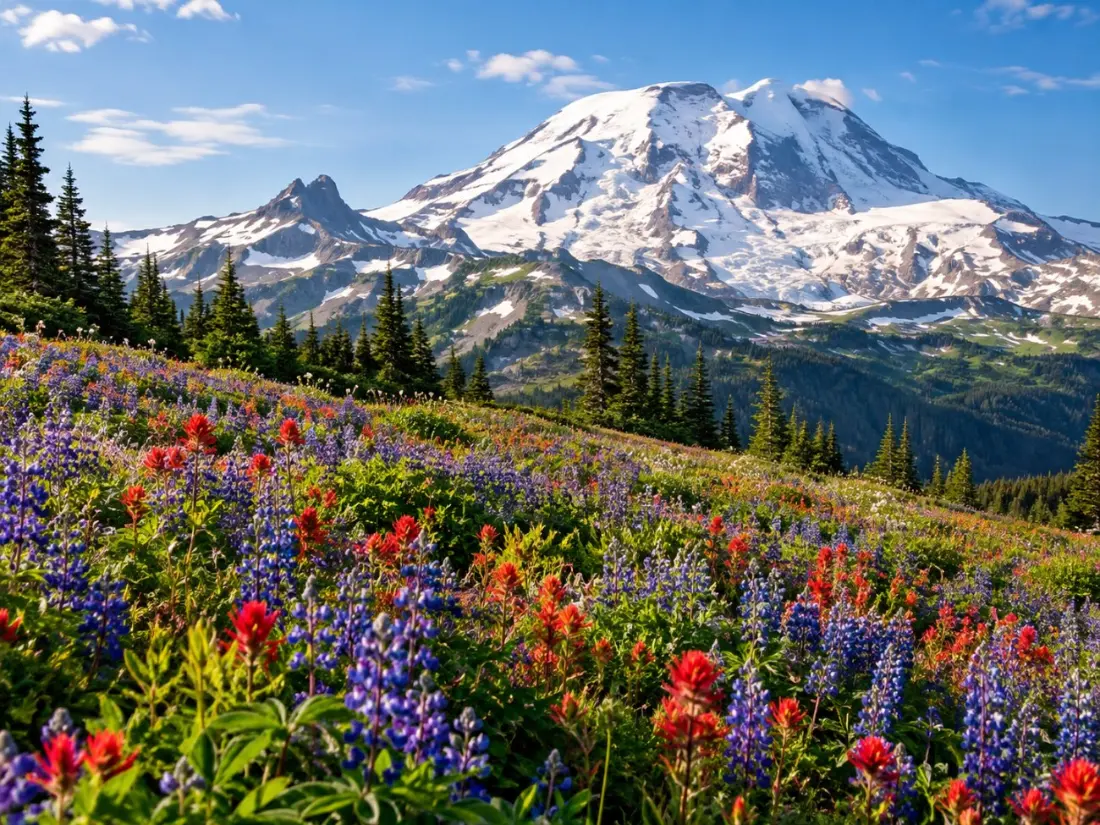
The meadow trails. From Paradise, the Skyline Trail to Panorama Point is the classic big day hike; the Burroughs ridges above Sunrise are the other.
Here is how the summit compares with the hikes day visitors actually do (round-trip figures from the NPS):
For shorter walks, see easy hikes at Mount Rainier. None of the tours on this site climbs the mountain: they visit the trails and viewpoints below the glaciers. The all-inclusive small-group tour plans two guided hikes through meadows, alpine views and waterfalls, the 14-person guided day plans about three hours of guided park highlights, and the five-person day hike is built around the Burroughs trail from Sunrise.
| Objective | Distance | Gain | What it needs |
|---|---|---|---|
| Summit (14,410 ft) | Glacier route | Varies by route | Climbing permit, rope skills, 3-4 days |
| Camp Muir (10,188 ft) | 9 mi | 4,680 ft | Snowfield navigation, whiteout risk |
| Skyline loop | 5.5 mi | 1,700 ft | About 4.5 hours, good fitness |
| Panorama Point | 4 mi | 1,700 ft | Steady climb, snow into July |
| First Burroughs | 4.7-4.8 mi | 900 ft | Sunrise, road closed to cars in 2026 |
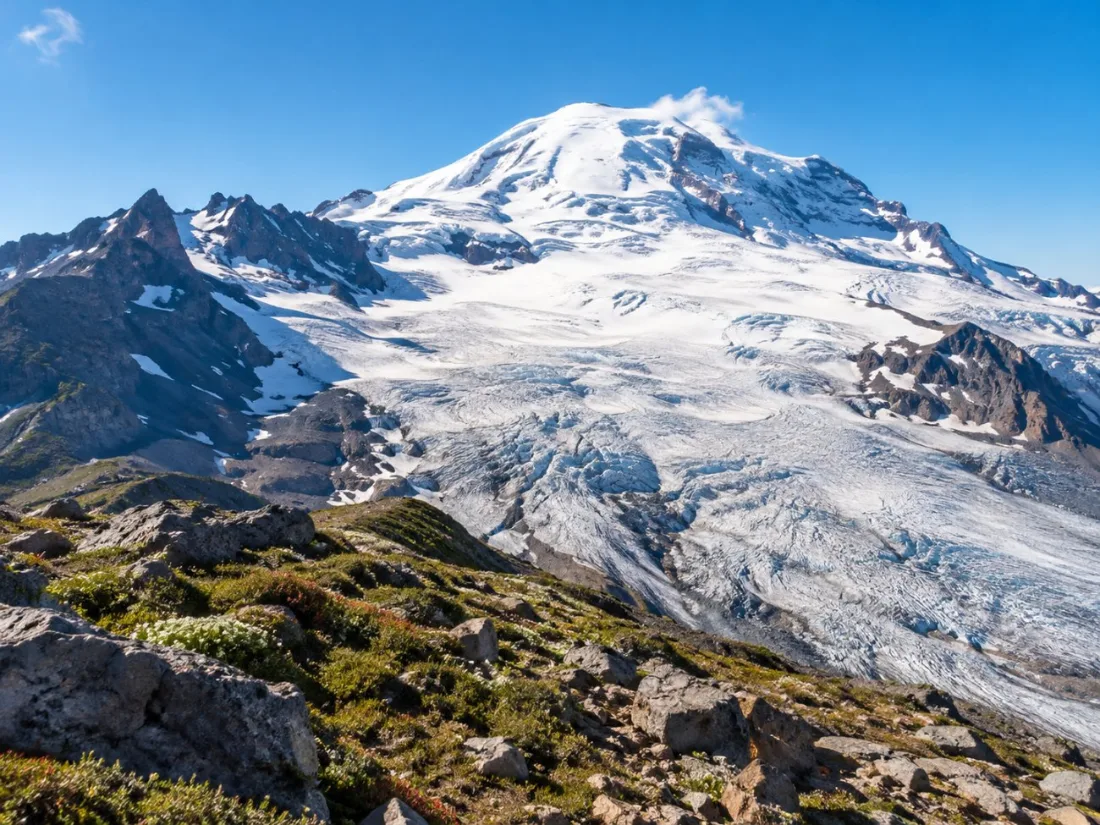
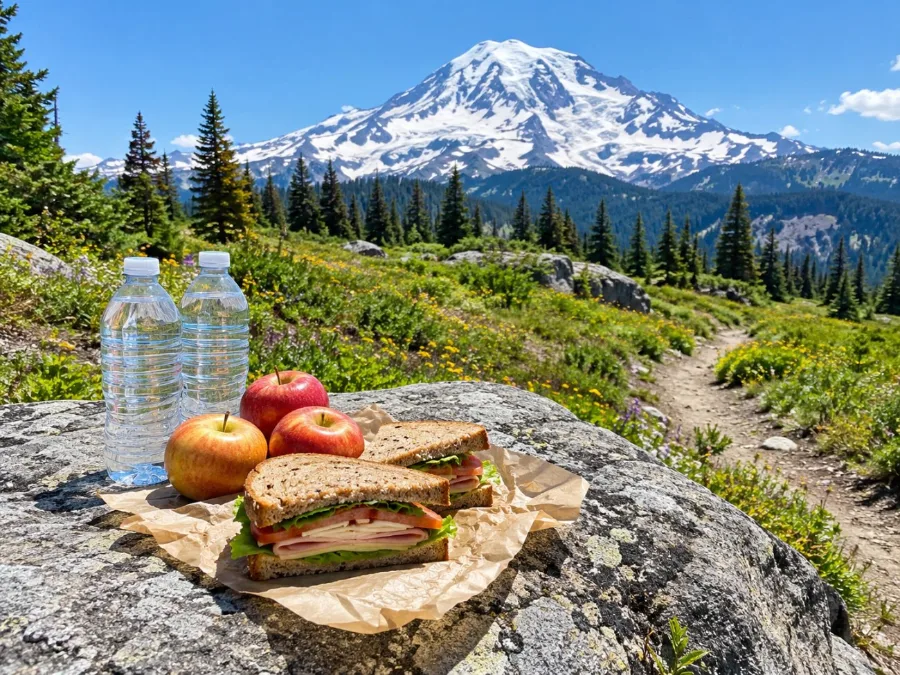
The all-inclusive small-group tour plans two guided hikes with a naturalist, a picnic lunch and park fees, in a group of up to 10.
Book thisFrequently asked questions
Can you walk to the top of Mount Rainier?
No. There is no trail to the summit. It is a glacier climb, and the NPS requires a climbing permit, the annual climbing fee and glacier-travel rope skills. The park plans three to four days for a climb.
How many people climb Mount Rainier each year?
About 10,000 people attempt it each year, according to the park. From 2015 to 2018 about 48% reached the summit; the NPS has not recorded summit success since 2019.
Do any of these tours climb Mount Rainier?
No. The tours on this site are day trips to the trails, waterfalls and viewpoints below the glaciers. To climb, you would book with one of the three guide services authorized by the park.
Is Mount Rainier 14,410 or 14,411 ft high?
The NPS and the USGS use 14,410 ft, from a 1956 survey. A 1999 GPS survey measured 14,411 ft, and recent surveys show the ice summit melting lower.
Ready to book
Choose your day
Each listing states free cancellation up to 24 hours before. Details come from the listing and can change.
Mount Rainier All-Inclusive Small Group Tour
- Pickup and drop-off from downtown Seattle hotels (per the listing)
- Naturalist guide, all park entry fees, snowshoes in winter if needed
- Seasonal picnic lunch, coffee or tea, snacks and refreshments
Mount Rainier: Day Hike on the Mountain
A proper trail day: the Burroughs ridges above Sunrise, with lunch and poles
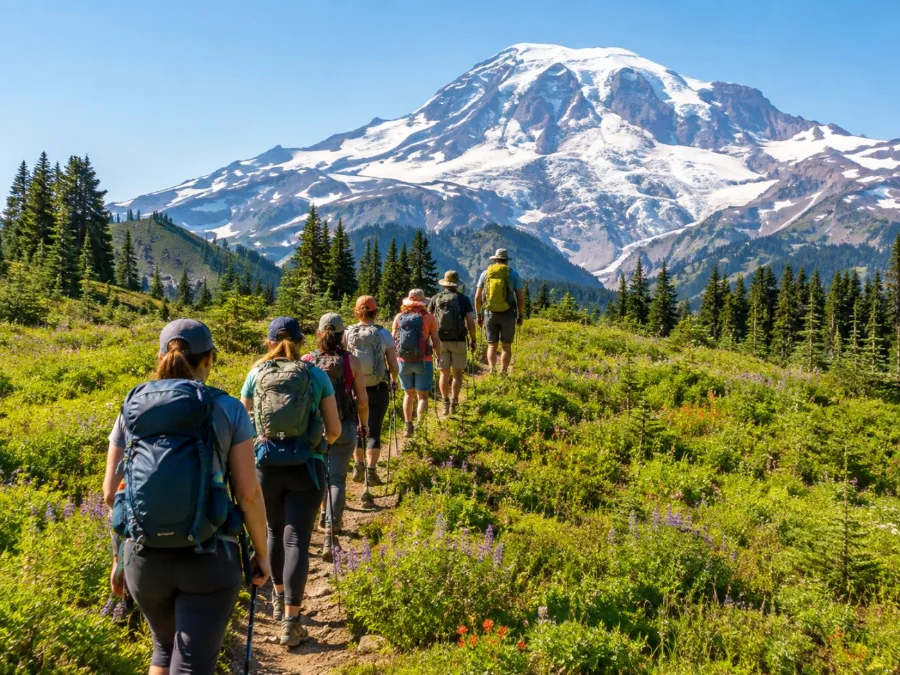
Mt. Rainier Park Guided Full-Day Tour
- Round trip from downtown Seattle (outside 415 Pine St), per the listing
- Professional guide and Mount Rainier National Park entry
- Snowshoes and crampons October to June; walking sticks when needed; water